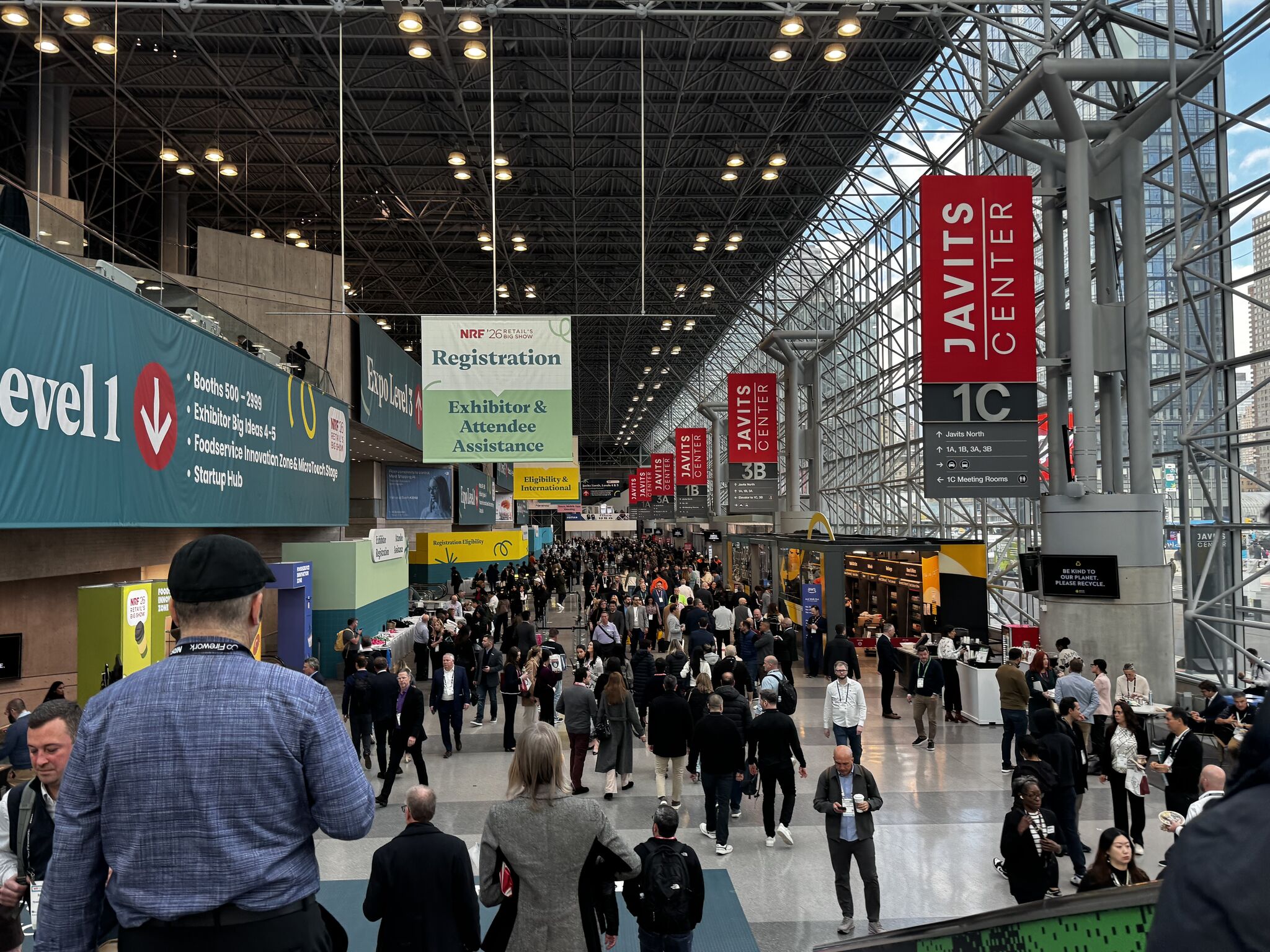
Coming back from Retail’s Big Show, one thing was clear. With 40,000 retail professionals from over 100 countries in attendance, the focus on retail innovation lived up to expectations.
AI was everywhere. On the show floor. In breakout sessions. Woven into nearly every conversation. Everyone was talking about it, selling it, and defining it a little differently.
The show served as an important reminder. While technology continues to evolve quickly, the fundamentals that make it work have not changed nearly as much as the messaging around it.
Real outcomes still define technology value
That reality creates a new challenge for retailers. Choosing the right technology now matters just as much as adopting new technology, especially as it becomes embedded in everyday operations.
AI is not the objective. Business outcomes are.
Across the event, AI was used to describe everything from genuine machine learning to advanced analytics and automation. Some solutions analyze data and act with limited human intervention. Others rely on people to make decisions at critical points. The distinction matters, because expectations should align with capabilities.
At its most practical level, AI should help retailers:
- Drive revenue
- Improve operational efficiency
- Reduce costs and protect margins
- Improve the customer experience
When AI solutions are selected and implemented with these outcomes in mind, they deliver measurable value. When technology becomes the strategy instead of supporting it, complexity increases and focus is lost.
Consistent customer experiences still win
As retailers modernize operations, customer expectations continue to rise. Shoppers expect experiences that are intuitive, reliable, and consistent across every touchpoint.
One theme surfaced repeatedly. Consistency has become a competitive differentiator. Customers may not notice when systems work seamlessly, but they immediately recognize friction or failure.
Customers expect technology to stay in the background, supporting experiences rather than defining them. A stalled checkout or unavailable service can erode trust in moments that matter most.
Several themes reinforced this shift:
- Reliability builds customer confidence
- Consistency matters more than novelty
- Breakdowns are felt immediately by customers and staff
As technology becomes more embedded in retail operations, there is less room for error. Winning experiences are defined by what customers never have to think about.
The human element still makes the difference
As technology becomes more capable, one truth remains unchanged. AI can support retail teams, but it cannot replace lived experience or human connection.
That distinction matters because customers still rely on real-world experience and human insight when making decisions. When someone is shopping for new hiking gear, for example, they want advice from someone who has actually used it, not just read about it.
At its best, technology enables the human side of retail by:
- Supporting expertise, not replacing it
- Reducing friction so teams can focus on customers
- Enhancing experiences through better insight and context
Retailers seeing the most impact are using AI to strengthen their teams, not sideline them. The human element remains a differentiator technology cannot replicate.
Data only matters when it leads to action
Retailers are not lacking data. They are lacking clarity on which insights actually impact their objectives.
While access to data continues to grow, not all of it is useful. The value comes from identifying what is actionable and filtering out the rest.
For example, when customers abandon carts or drop out of a journey, the issue is often not product or price. More often, it is friction in the process. Data helps uncover where those moments occur, but only when teams focus on the right questions.
At its most effective, data should help retailers:
- Identify friction points in the customer journey
- Understand behaviors that impact conversion and loyalty
- Inform changes that improve experiences and efficiency
Without that focus, even advanced analytics become noise. Insight only creates value when it leads to clear decisions and action.
Strong foundations enable innovation
As retailers look to move faster with new technologies, many face the same constraint. They are not confident in the foundation beneath them.
Retailers want to leverage AI, data, and advanced applications, but hesitation sets in when core systems are unreliable. If networks and connectivity cannot be trusted, innovation becomes harder, not easier.
That risk became clear during a real-world scenario shared at the event. A mall-wide outage forced stores onto backup systems just as shoppers flooded cellular networks. Many locations lost connectivity entirely. Retailers with network prioritization in place were able to keep critical systems running while others could not transact at all.
The takeaway was simple. When retailers trust their foundational technology, they spend less time in crisis mode and more time focused on customers and growth.
Strong foundations give retailers the confidence to:
- Keep operations running during disruptions
- Scale new technologies without hesitation
- Reduce operational strain on teams
Without confidence in the core, even the most promising technologies struggle to deliver value.
The takeaway
AI may have dominated the conversation at NRF, but the most valuable insights were familiar ones.
Retailers seeing real impact are not chasing technology for its own sake. They are focused on outcomes, delivering consistent experiences, empowering their people, acting on the right data, and building on foundations they trust.
Innovation moves quickly, but fundamentals endure. The best technology works quietly in the background, supporting the business reliably rather than competing for attention.
At One Source, these themes reflect the conversations we have with retailers every day. From core infrastructure to deployment and ongoing support, we help ensure technology is implemented effectively and continues delivering value long after the initial investment.
Because in retail, the best technology is often the kind customers never notice and teams can always count on.
Ready to bring clarity to your next project?
Send a request to speak with a One Source technology advisor.